












Is acceptance a victory or a defeat? A nod to reality or the betrayal of one’s own self-worth? Questions I can’t help but ponder when watching longtime couples constantly bicker. The theory is that their bickering is their own particular love-language, developed over the years and understood only by the two of them. That could be true. But, it’s a hard sell to those who have grow-up around it.
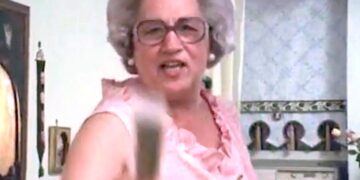
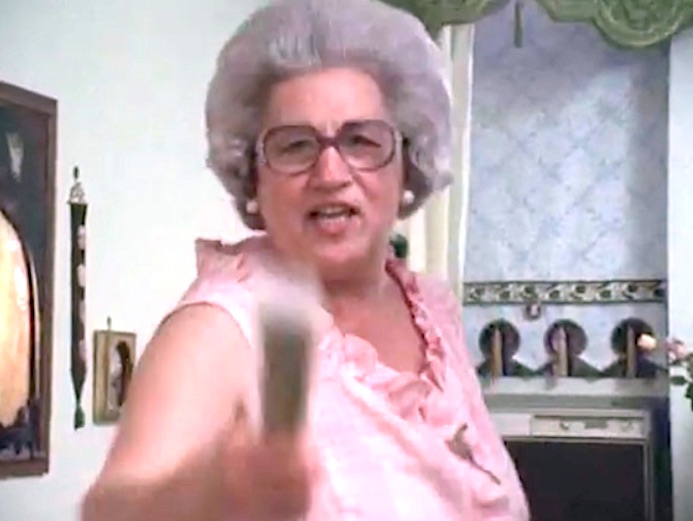
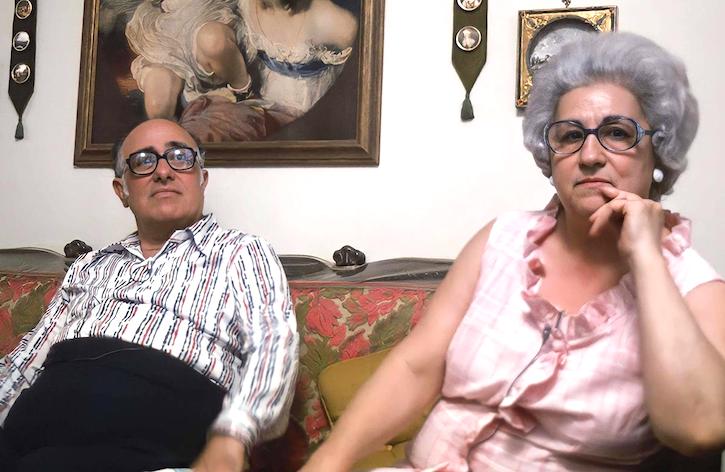
Italianamerican (1974) is a short documentary, only 49 minutes long, directed by Martin Scorsese. It features his parents, Catherine and Charles, in their modest apartment in NYC’s Little Italy. There, they’re prompted by their son to tell the story of their families journeys from Sicily to America and what life was like for their own parents as immigrants. I love this documentary. Even though I simultaneously have an overwhelming urge to get away from it as quickly as I can. It gives me an emotional headache – not heartbreak – as it candidly records a world where affection is expressed through dodging direct answers, keeping secrets and casual criticisms.
Because, unfortunately, it’s not the history of sacrifice, love or even affection that will survive and be passed down through the generations. It’ll be the constant bickering. That communication delivered via verbal rabbit punches. A communication borne of centuries past, learned in abject poverty and through constant loss among the ‘contadini’ of Southern Italy and Sicily who made their way to America and survived by one, simple rule: never trust anybody.

It’s interesting to see Scorsese circa, 1974. He hasn’t made Taxi Driver (1976), Raging Bull (1980) or Goodfellas (1990). He hasn’t won the Academy Award for The Departed (2006). He’s not yet become the icon. He’s 31 years-old, divorced, has one child and is a film professor at NYU. Known mostly in NYC film circles, he’s made some student films, one low-rent film for Roger Corman and the little known, Mean Streets (1973).
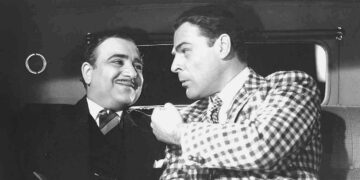
Before sitting down with his parents, Scorsese had just returned from the Cannes Film Festival. His colleague, Francis Ford Coppola, had received the highest honor, the Palme d’Or, for The Conversation (1974). Scorsese had helped Coppola a few years earlier with possible location spots for certain NYC scenes for The Godfather (1972). Coppola had sat with Scorsese and his mother, Catherine, at the very same little table we see in this film. Catherine had asked Coppola if he could somehow use Richard Conte in his movie, as she had always thought he was so handsome. Coppola dutifully promised he would. And thus, Barzini was cast!
So, where was Marin Scorsese at Cannes? By his successful friend’s side? Nope. Scorsese was watching his film, Mean Streets. It was being screened outside of the official Cannes competition at something called The Director’s Fortnight. An independent event, held parallel to the official goings on. Not generally given much media coverage, it was a kind of close-but-no-cigar thing.
But, Scorsese must have felt like his big break was coming, as he would soon be leaving for the west coast. He’d been hired at the beginning of the year to direct a film in Hollywood for Warner Bros. It was all there waiting for him – if – he could make this movie, something called Alice Doesn’t Live Here Anymore, into something special.
But, where was he now?
Sitting with his parents, listening to the familiar tales of deprivation, sacrifice and back-breaking labor. Through Scorsese’s families individual stories he was able to capture and document the universal Italian-American immigrant experience. While simultaneously getting criticized by both parents for an odd-looking tooth they had just noticed, that “…looks like hell.”
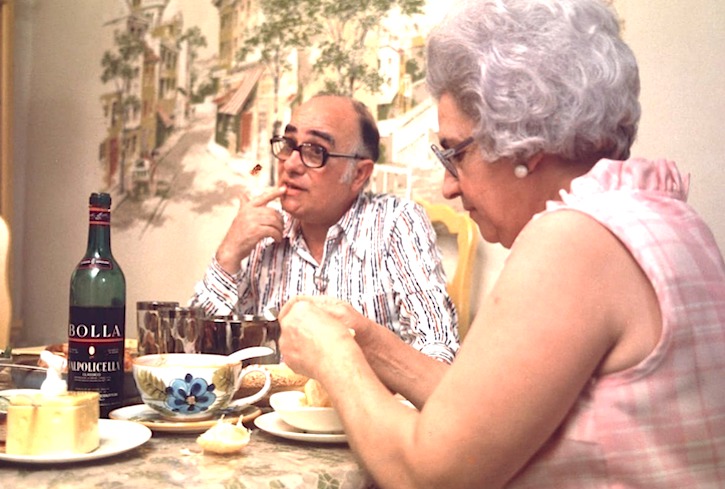
In the documentary, which plays at times like an extended home movie, Scorsese indicates they’re done. But, the camera’s keep rolling for a bit more real-life. And, though it’s obvious his parents are devoted to him and that no one can help but be charmed by Catherine and Charles Scorsese, watching Italianamerican you come to understand why reel-life was so important for the young Marty to escape into.
And, how he developed his legendary determination and resilience.
Ahh, the perennial debate: Is it called sauce or gravy? Catherine gives a demonstration of making her ‘sauce’ at the beginning of the documentary and her written ‘sauce’ recipe appears at the end of the credits. But, when she speaks of her father’s, who made his own, she calls it ‘gravy.’ Was she putting on airs as her husband, Charles, accused her of doing for the cameras? You’ll have to watch Italianamerican and decide for yourself.